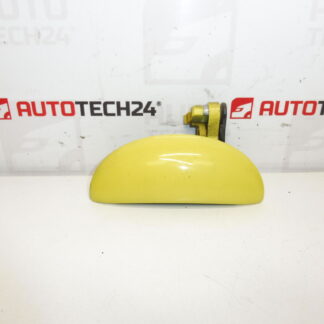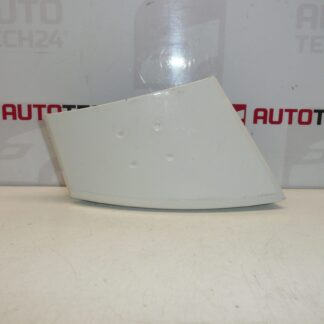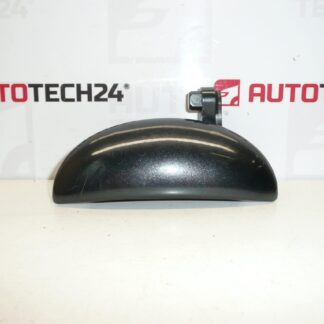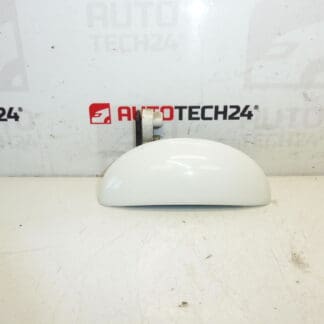
Description
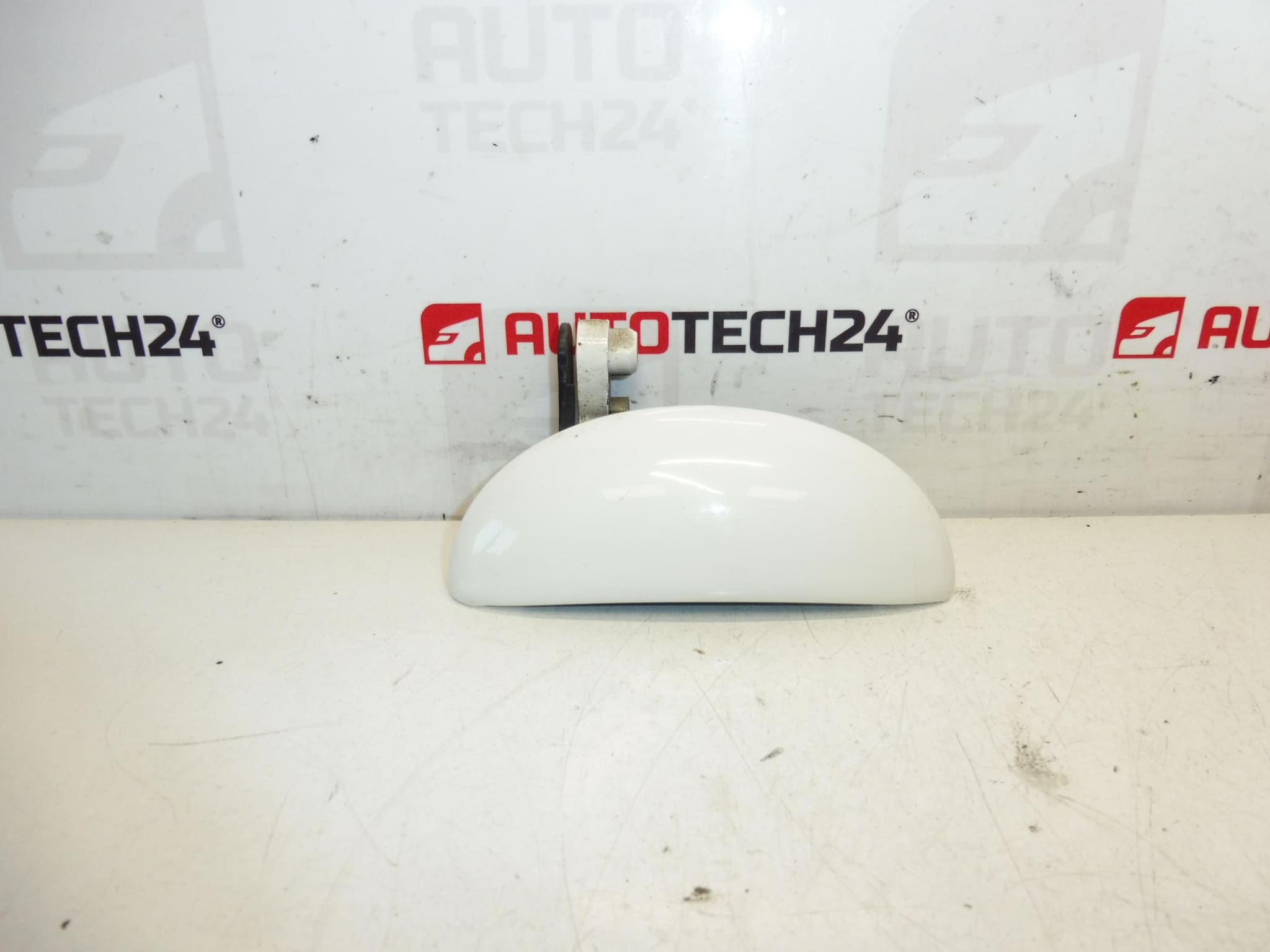
Right front door handle for CITROËN C1 and PEUGEOT 107. Color KWD – Lipizzan White paint.
Product Overview
High-quality exterior right front door handle tailored for Citroën C1 and Peugeot 107. This direct-fit replacement in Lipizzan White (KWD) restores original appearance and function. Designed for professional workshops and DIY mechanics, the handle offers OEM-style fitment and finish to maintain vehicle aesthetics and reliable operation.
Function And Common Failure Modes
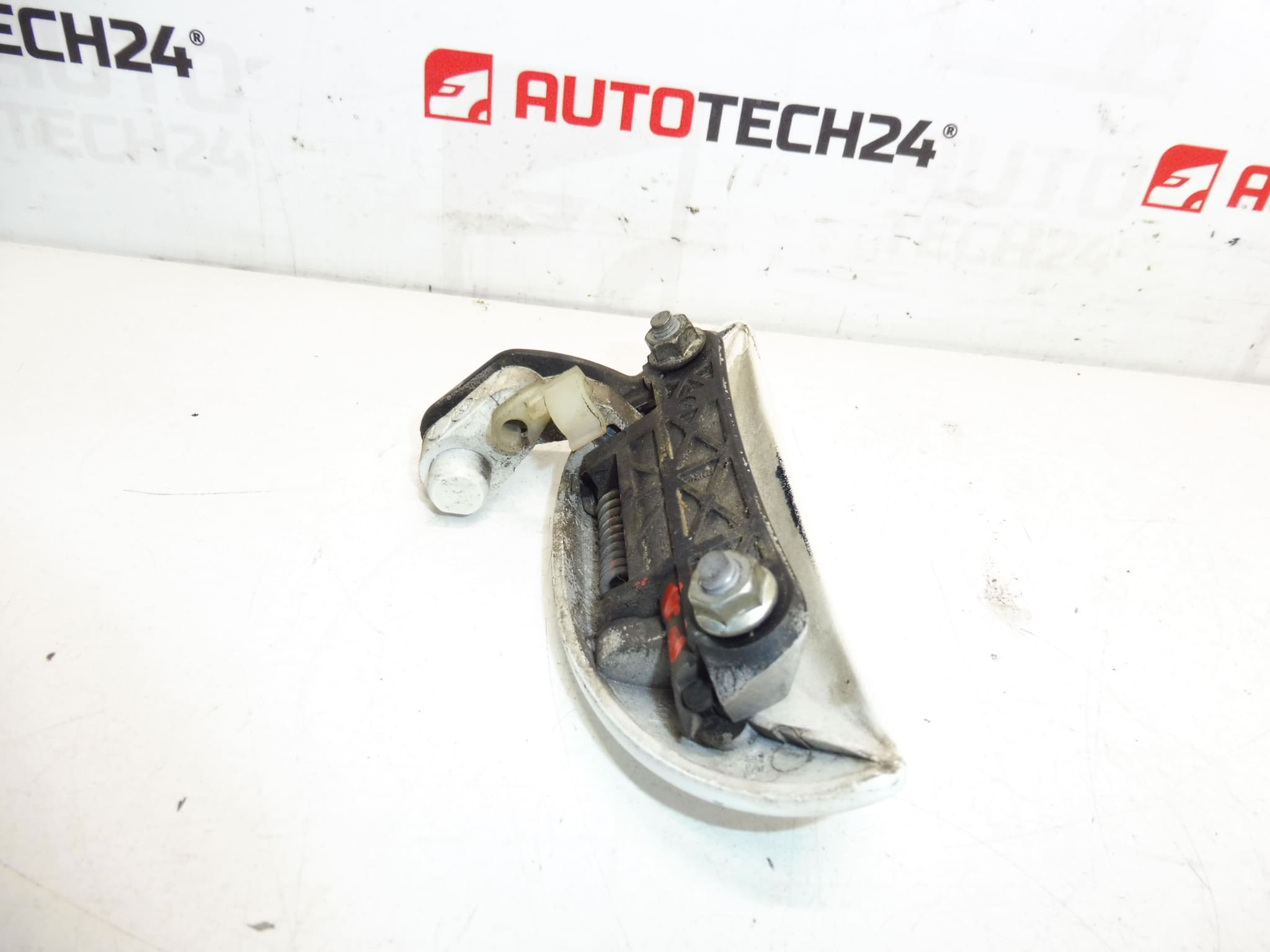
The exterior door handle provides mechanical access to the door latch and interfaces with the locking linkage and, where fitted, the central locking actuator. Typical failure modes include plastic fatigue and breakage of internal levers or pivots, paint chipping from impacts or abrasion, corrosion at mounting points, and wear from frequent use. Failure may present as difficulty opening the door, loose movement of the handle, or complete breakage.
Replacement Procedure
Replacement is straightforward for experienced technicians and competent DIYers. Typical steps:
- Remove the interior door trim panel to access the handle mounting and linkage.
- Disconnect the lock rod and any electrical connectors associated with the central locking system.
- Unscrew the retaining bolts/screws and remove the old handle. Transfer the lock cylinder if required by the vehicle key setup.
- Install the new handle, reconnect linkage and connectors, and secure fasteners. Ensure correct alignment of the mechanism.
- Test manual operation and central locking function before reinstalling the door trim.
Tip: Protect the paint around the handle during removal. Lubricate pivot points and inspect the lock rod and actuator for wear while the door is open.
Installation Recommendation
Use appropriate trim tools to avoid damaging clips and panels. Tighten fixings evenly and avoid overtightening to prevent cracking the handle base. When transferring a lock cylinder, ensure key alignment and smooth operation. Verify that the handle operates the latch freely and that central locking cycles correctly after installation.
Why This Part Commonly Fails
Door handles are exposed to constant mechanical load, temperature variations and road contaminants. Over time plastic components can fatigue, pivots can wear or corrode, and external damage from impacts or vandalism can necessitate replacement. Environmental factors such as salt and moisture accelerate corrosion of metal fixings and internal mechanisms.
Technical Information
- Manufacturer: Stellantis (Citroën / Peugeot)
- Model: Citroën C1; Peugeot 107 (Right Front)
- Product Codes: 9101AH; KWD
- Other Numbers: Not Specified